AI Inspection Is No Longer a Future Option
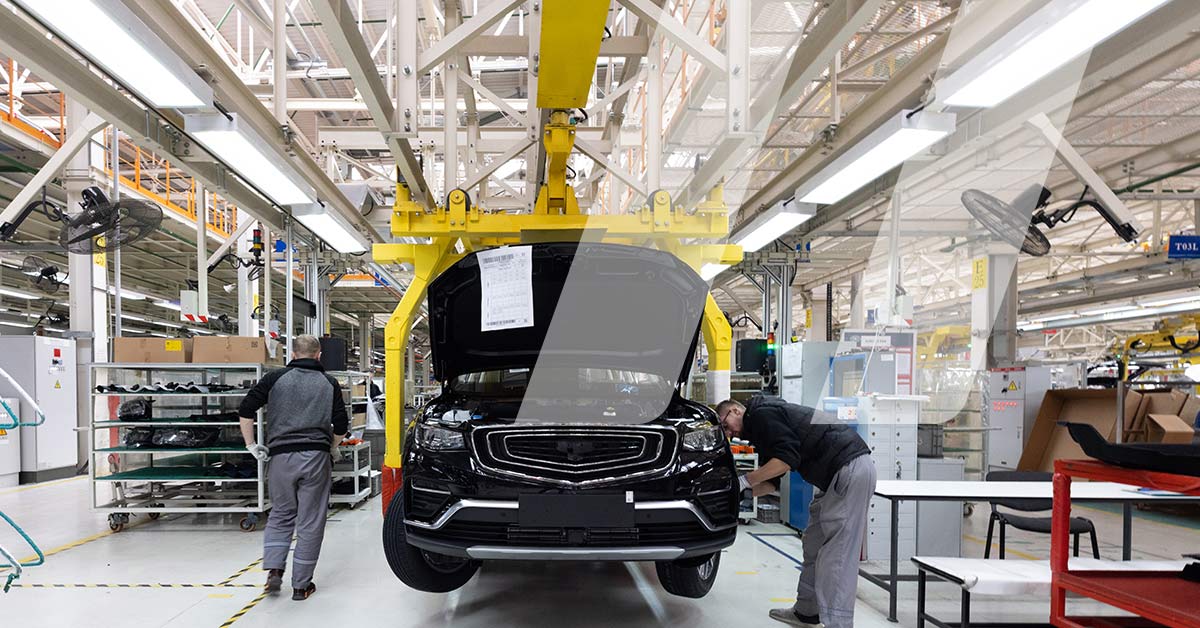
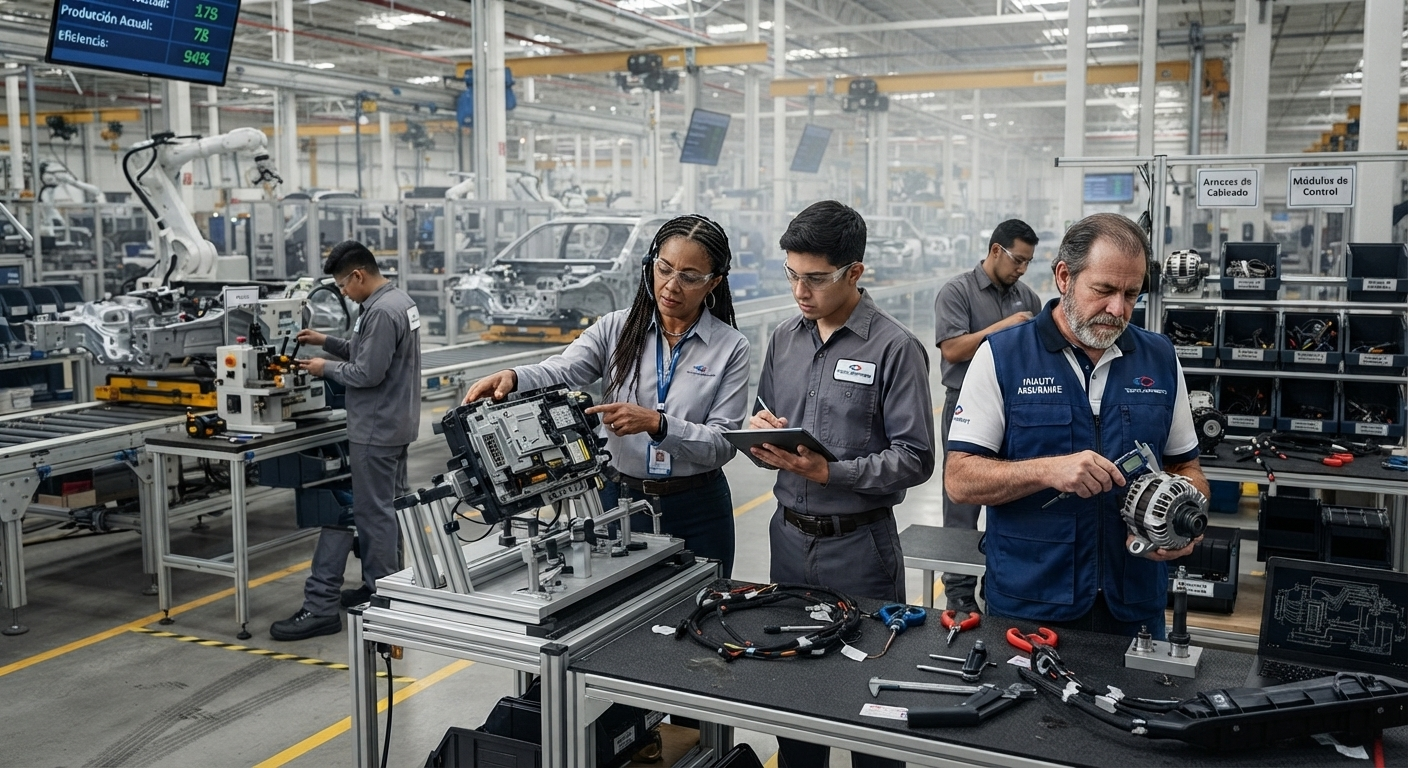
Machine-assisted quality control has moved well beyond isolated pilot projects and is now running at scale on leading production lines. One major European vehicle manufacturer already uses generative artificial intelligence to automate bespoke quality inspections across a mixed-model production line, where a different vehicle configuration rolls off the line every minute. At another global OEM’s plant, smart cameras powered by machine learning detect weld defects on vehicle underbodies in real time and automatically direct finishing robots to the exact spot, with no human in the loop.
These are not isolated cases. A review of more than fifty studies across automotive, aerospace, and assembly manufacturing found that machine learning-powered visual inspection frequently exceeds 95% defect detection accuracy, matching or outperforming human inspection under real production conditions. For any supplier working with top-tier OEMs, this is no longer a technology curiosity — it is the direction the entire supply chain’s quality baseline is moving toward, and it rarely stays at the OEM level for long.
The Pressure Will Move Down the Supply Chain
OEMs do not adopt a new quality capability in isolation. Once an automaker proves that automated inspection reduces escapes and warranty costs on its own lines, that expectation becomes part of how it evaluates suppliers. Tier 1 suppliers are typically the first to feel this, through tighter scorecards, new customer-specific requirements, or direct questions during supplier audits about how defects are detected and documented. Tier 1s, in turn, pass the same expectation down to Tier 2. A capability that looks optional today has a short shelf life as an option in this industry — it usually becomes a baseline requirement within one or two product cycles.
The Challenge Most Plants Haven’t Anticipated
What few suppliers have fully resolved is what happens beneath the accuracy figure. Roughly three out of four machine-vision deployments in industrial settings remain stuck at the pilot or prototype stage, and the reason isn’t budget. It’s structural.
A classic inspection system runs on fixed rules: every defect type is catalogued, every threshold is documented, every decision traces back to a written criterion an auditor can review line by line. A learning-based system doesn’t work that way. It learns from the data it receives, adjusts its own internal criteria over time, and in many cases cannot precisely explain why it made a specific call on a specific part. For a certified supplier, that difference isn’t technical — it’s documentary. It is exactly the point where such a project, however flawlessly it performs on the shop floor, can fail to survive an audit, because the evidence an evaluator expects to see simply doesn’t exist in a form they recognize.
The Industry Is Already Closing That Gap
This tension already has an answer at the industry level, which confirms it isn’t a marginal concern invented by overcautious quality teams. A major automotive industry standards body published a dedicated framework in 2026 on artificial intelligence in quality management, formally defining concepts such as auditability, explainability, bias, and model drift, and tying them directly to the quality systems already used by certified automotive suppliers. IATF 16949 itself is evolving in the same direction, increasingly acknowledging machine learning for quality prediction and automated root cause analysis as part of its scope.
The underlying message is consistent across both: automated inspection on the production line doesn’t replace the quality management system. It becomes a new category of evidence that system has to learn to document, store, and defend.
What Tier 1 and Tier 2 Suppliers Should Demand Before Integrating AI
For a quality or operations leader evaluating these systems, the relevant question isn’t whether the technology works — that’s already proven at scale. The real question is whether the technology provider can demonstrate, with traceable evidence, four things.
That every model decision is logged against an identifiable criterion, not just a pass-or-fail result. That a defined process exists to detect when the model is drifting away from its original validated behavior. That integrating the system does not break the traceability chain the end customer already requires across the rest of the production process. And that, in the event of an audit, someone on the supplier’s side can explain how the system actually works in terms an evaluator can follow — not only in terms the data science team that built it would understand.
A vendor demo that only answers the first question is not ready for a regulated production environment.
The Real Differentiator Isn’t the Technology
This inspection technology is mature and available to anyone with the budget to buy it. What separates a supplier that turns it into a lasting competitive advantage from one that turns it into the next audit finding isn’t which model they choose — it’s how deliberately they integrate it into their existing quality management system. That is the conversation every automotive supplier should be having now, on their own timeline, before it arrives as the next customer-specific requirement imposed on them with a deadline already attached.